
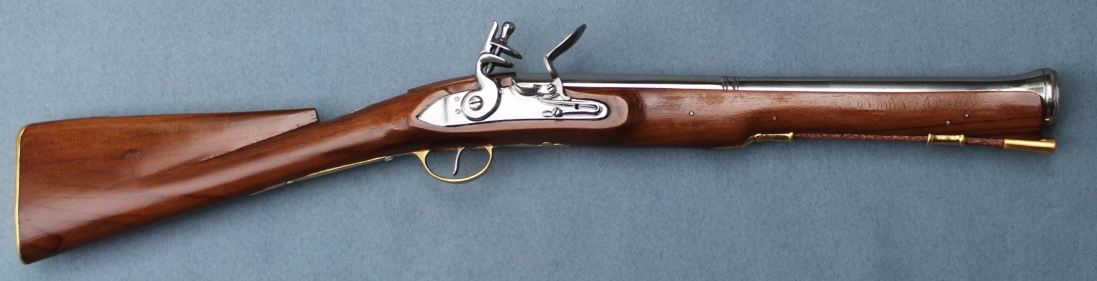
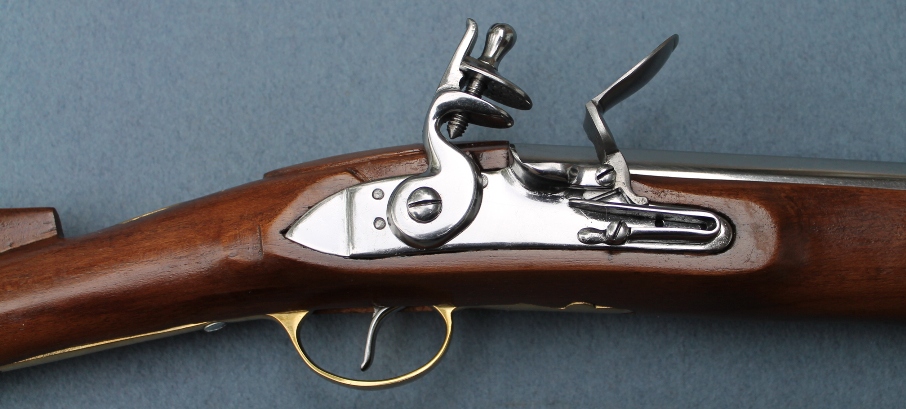
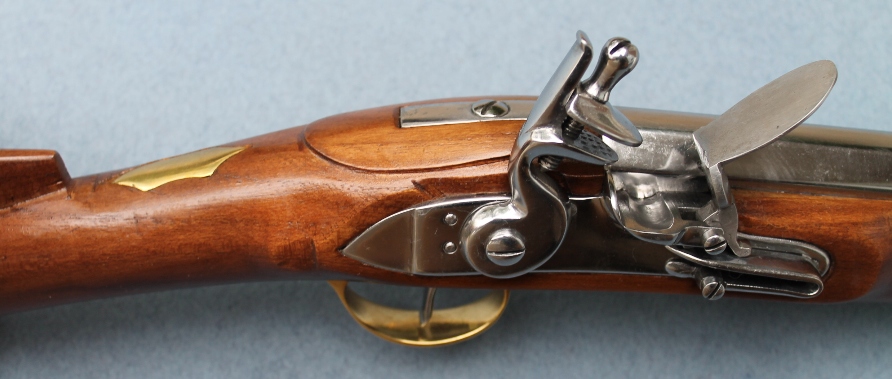

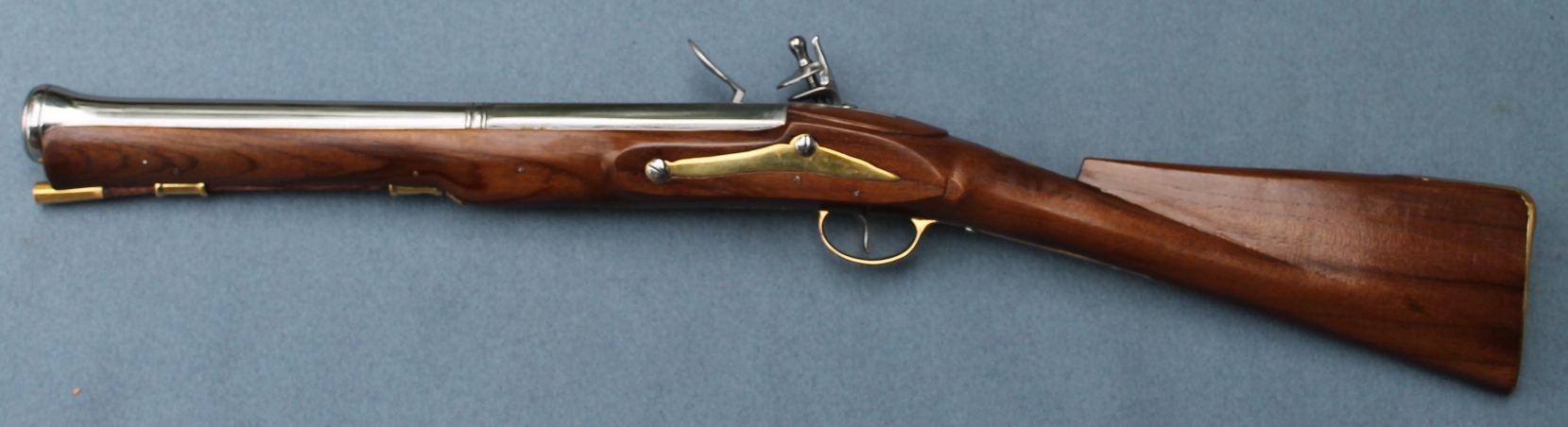
18th Century Blunderbuss for Sale - Pirates and Privateers - Coachmen - Fur Traders and Frontiersmen -
We provided this blunderbuss to the Pirates of the Caribbean Series
In the late 1600s the blunderbuss (or blunderbess / musketoon) started to become popular as a weapon for close quarters because of its ability to deliver a blast of shot or buck and ball. As early as 1689 this unique flintlock is documented as available to seafarers (including pirates) at Port Royal in Jamaica. Numerous armies and navies produced various versions of this item all the way into the 1840s. However its zenith seems to have been in the mid-1700s when it was used both by soldiers, sailors, and civilians as a means of defence in close quarters. At one point, George Washington viewed the blunderbuss as an alternative to the carbine for the Continental Dragoons. It is no surprise considering its carbine-like length and feel.
Throughout the 18th century many blunderbusses in both brass and steel barrels were manufactured. On board ship often the steel barrels were japanned or blackened. As one could imagine, this item was ideal for fighting on ship particularly in repealing of enemy boarding parties. In addition their use by settlers in the American colonies is also well-documented. By the latter half of the 18th century the blunderbuss found a following with coachmen as a new tool to thwart the pistol-totting highwayman. The blunderbuss has also been romanticized as the choice firearm of the pirate or privateer.
The story did not end in the 18th century for the blunderbuss. It saw new popularity in 1815 as a weapon of choice for home defence, particularly in urban areas like London. The concern among the civilian population was the disbanded soldiers after the Napoleonic Wars would turn to a life of crime. While the crime wave did not materialize, blunderbuss manufacturing skyrocketed. In North America it found another use as a canoe gun and they are documented as part of the weaponry with the Lewis and Clark Expedition, and were part of inventories in 1816 at the Fur Trade post of Fort Astoria in Oregon territory.

