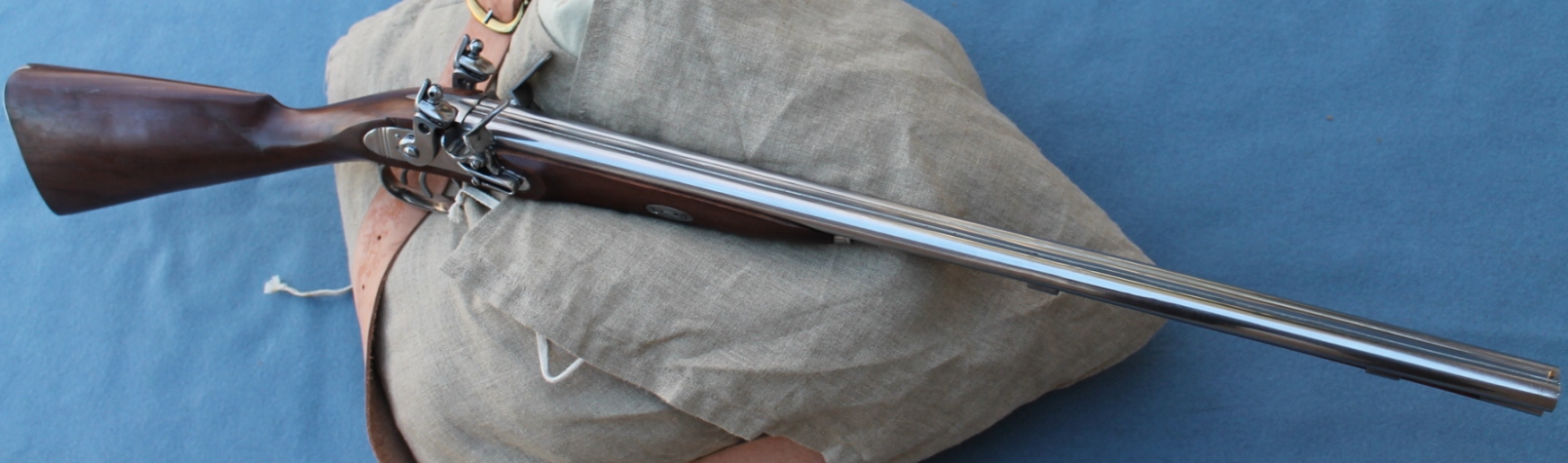
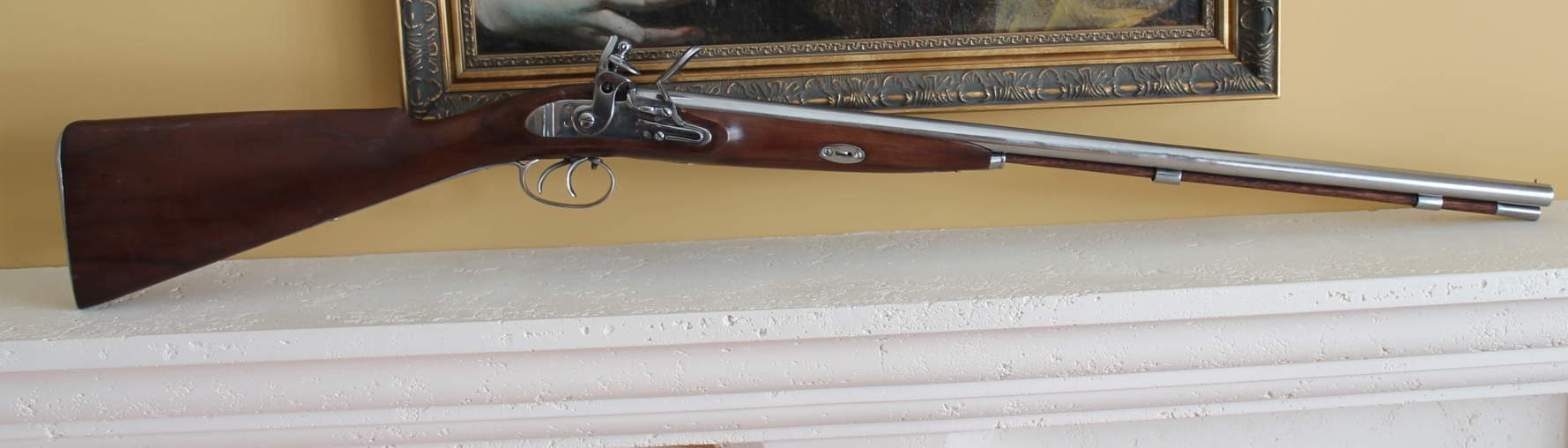
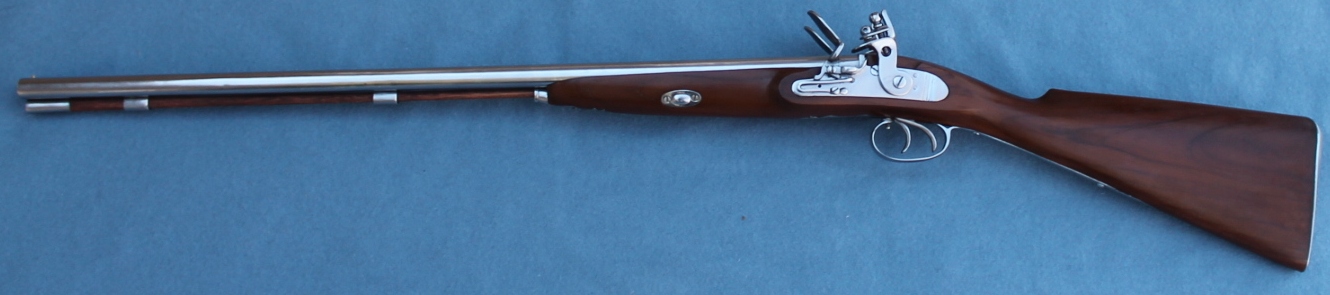
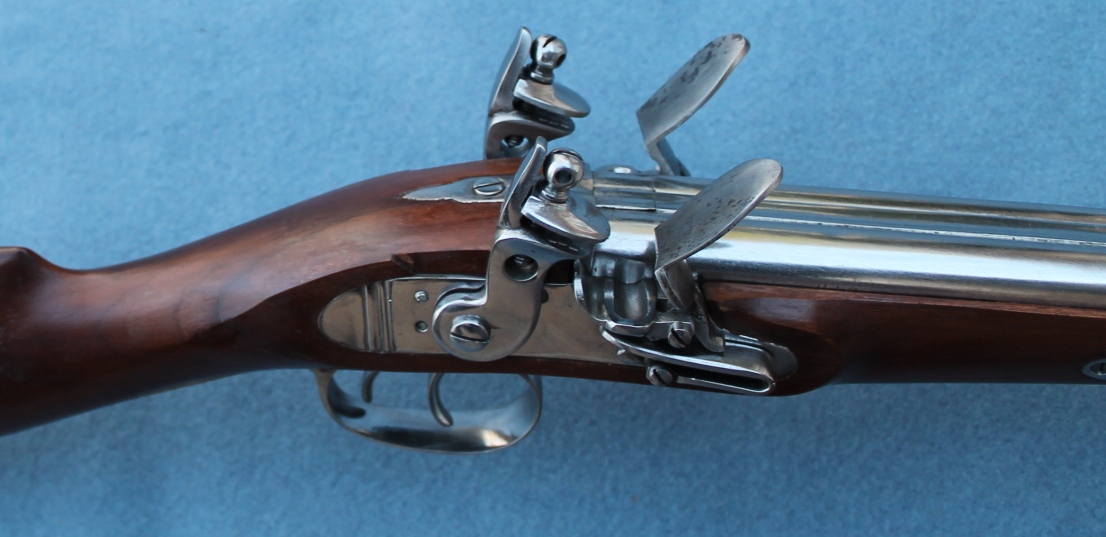
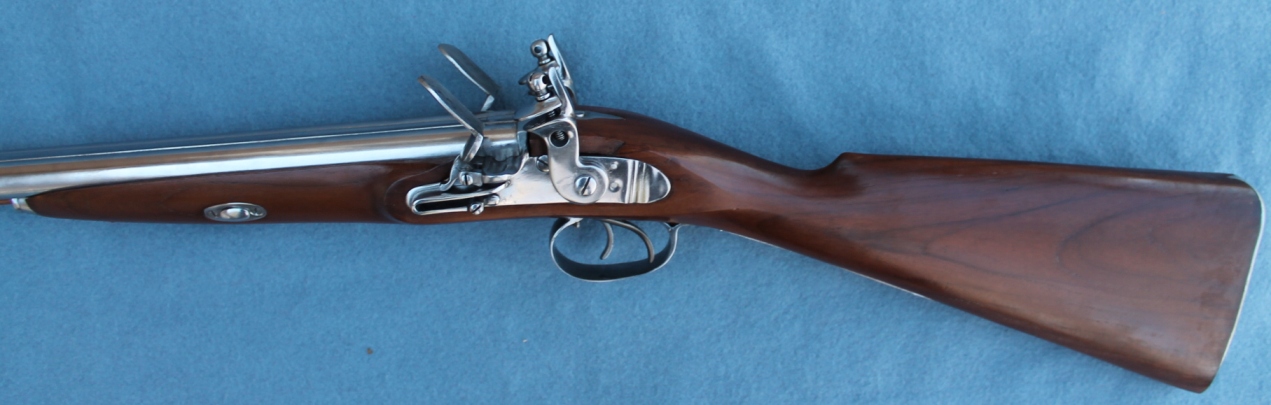
A double-barrelled flintlock reproduction reflecting the shotguns carried by travellers, naval officers and frontiersmen.
Supplied in a non-firing state.
Full view · 1 / 6Select a photograph to inspect
Technical details Specifications & construction
Barrels29 inches, double barrel
Bore20 gauge (.62 calibre)
Overall length44½ inches
WeightJust over 7 pounds
Each 20 gauge
(.62 calibre) barrel is 29 inches long and with a cylinder bore.
The overall length of this reproduction is 44 1/2 inches and weighs a little
over seven pounds. The barrels are made of
tempered seamless gun steel
(type:BS970
no.080M40) with
tight breech plugs.
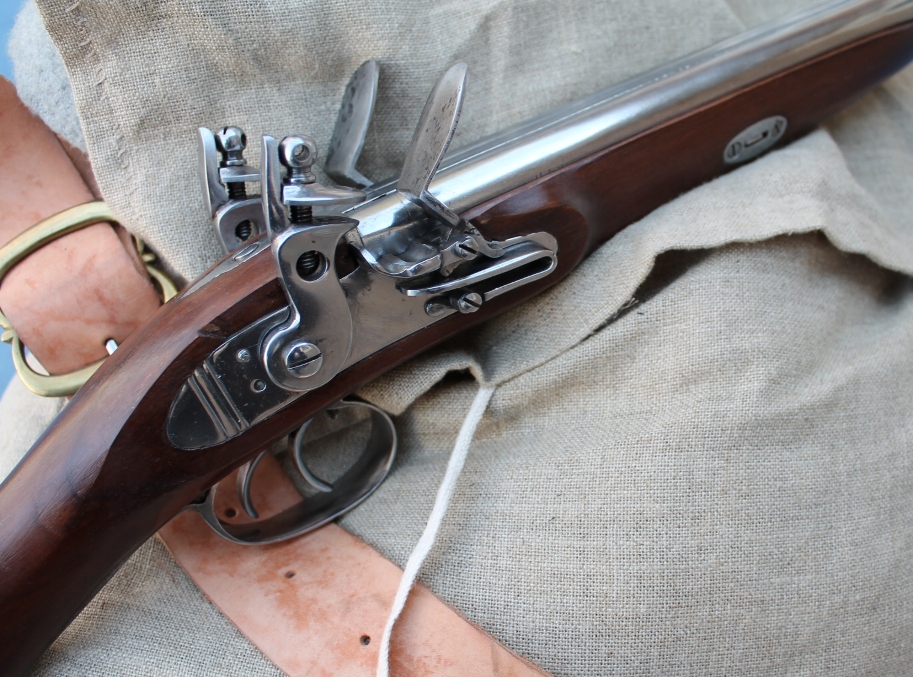
The locks are made with strong durable springs and
has case-hardened frizzens (hammers) that throws good sparks.
We use an
industrial case-hardening factory process that makes sparking both more reliable
and longer lasting.
Presently no other musket provider uses this
technique.
As with all our
other flintlocks, the vent is not drilled (read details below) so we can ship easily to your door
throughout North America and to Europe and the UK.
Aside from that they
are exactly like
the originals.
A fine addition to any collection.
The story behind the pattern
History
- Captain
Cook - American Revolution
- Exploration and Frontiersman - War of 1812 - Battle
of the Alamo
The double barrel
flintlock shotgun really started to be common place shortly after the French
and Indian War (1760). It's efficiency as a fowling piece was almost
immediately recognized by sportsmen. However having a
second shot also had its military applications, and this was not lost on the
famous explorer Captain James Cook. Anytime a conflict was expected
with the local population, Captain Cook was noted taking out his trusty
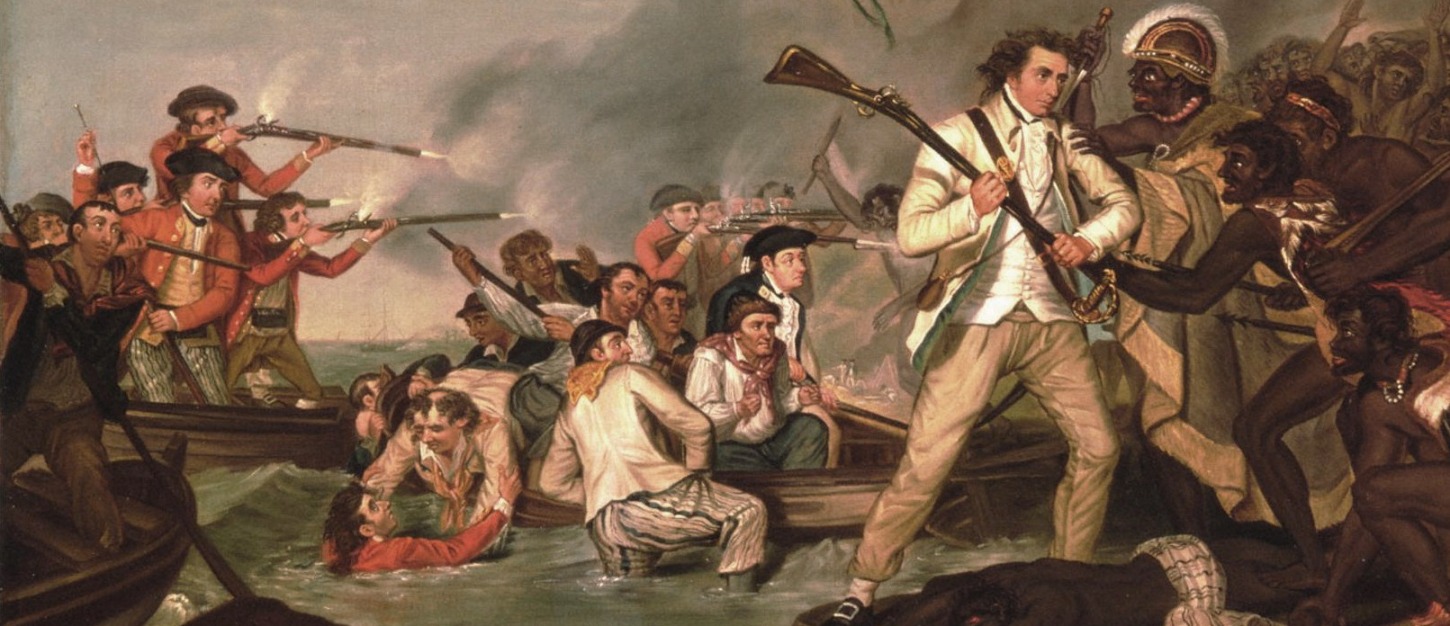
double-barrelled firearm. It was the firearm in his hand when Captain
Cook was killed in Hawaii in 1779: "A ruffian making a stroke at Capt
Cook, was shot dead by the Captain himself, who having a double-barrelled
gun, was aiming at another,..." when he was struck to the ground and stabbed
(Journal of Captain Cook's Last Voyage... pub.1785).
Cook illustrated using his shotgun as a club in
Death of Captain James Cook by George Carter, 1783
The advantages of
a double barrel shotgun were realized by other Naval officers. Indeed
as late as 1836, one U.S. Military scholar recommended the U.S. Marines
should be equipped with them while aboard ship (read more
here ). On land, there are
accounts of Light Infantry officers carrying double barrelled flintlocks.
For example, Captain Richard Ferguson used one in the Battle of the
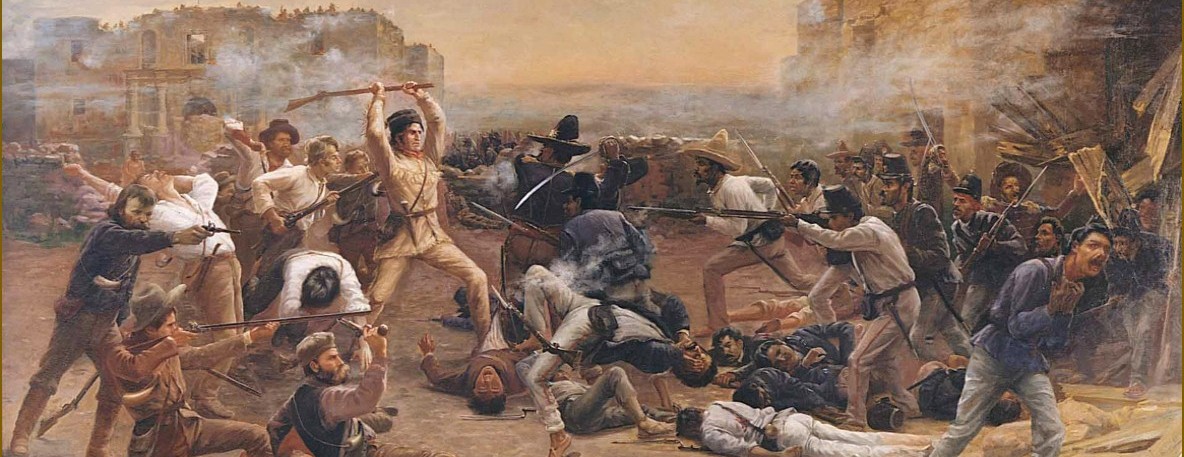
Chateauguay in 1813. However probably its most famous use was at
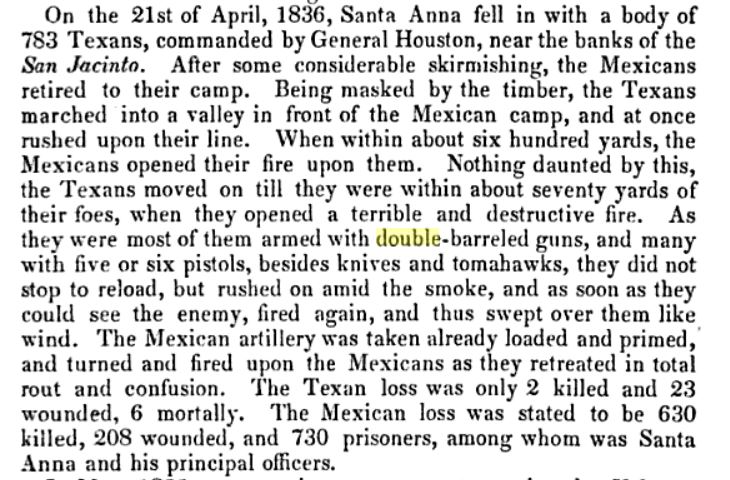
the Battle of the Alamo. Texans armed themselves with whatever they
had including double barrelled shotguns and a history of the battle written
12 years later suggests many had this firearm (read more
here) . That was certainly
the case for the Alamo's famous commander, Colonel William Travis who put
his double barrelled flintlock to heavy use, and had recommended it as the
principal firearm of the Texan cavalry.
Battle of the Alamo (Texas State Library and
Archives)
Our Guarantee
If upon receiving your musket you are not completely happy with
your purchase, you may return it for a refund. All we ask is you cover the
shipping costs. It has to be returned in two weeks of receipt and be in its
original state (unaltered and unmodified).
Non-Firing State
We sell historically accurate muskets and pistols in a non-firing state for demonstration purposes. This allows us to comply with various local, state, national and international firearms regulations, along with shipping company policy restrictions. This means the product comes right to your doorstep. A certified gunsmith may decide to alter a musket or pistol to a firing state by drilling the vent hole and test firing it. No need to remove the breech plug. We are not legally responsible for any changes from its present state. Please read our Conditions of Use and Legal Disclaimer. The customer is expected to be aware of the laws of their locality that govern products of this nature.