A reproduction of the Imperial Guard infantry musket, with St. Etienne markings and a trumpet-style ramrod.
Supplied in a non-firing state.
Full view · 1 / 7Select a photograph to inspect
Technical details Specifications & construction
Barrel44¾ inches
Bore.69 calibre
Overall length60 inches
Like other infantry
muskets, the imperial guard musket has a
straighten frizzen cover over the brass pan.
The .69 calibre barrel
is 44 3/4 inches long and the musket's total length is 60 inches.
The lock plate has
the St. Etienne arsenal markings, along with the appropriate stampings on the
breech.
Borrowed from the Prussians, the trumpet style
ramrod was standard for the French Army after 1777.
As the photographs attest, this
replica is quite well assembled with a case hardened frizzen cover (hammer)
producing good sparks.
The
seamless tempered barrels are made of gun steel (type
:BS970 no.080M40-
auto industry foundry)
and the breeches are tight.
We use an
industrial case-hardening factory process that makes sparking both more reliable
and longer lasting.
Presently no other musket provider uses this
technique.
As with all our
other flintlocks, the vent is not drilled (read details below) so we can ship easily to your door
throughout North America and to Europe and the UK.
Aside from that they
are exactly like
the originals.
A fine addition to any collection.
This is the musket used by Napoleon's
famous Imperial Guard. The design is quite similar to the standard
French Infantry musket of the time except the barrel bands, trigger guard
and butt plate are made of brass. Initially most of the "Garde
Impériale" muskets were made at the Versailles armoury but this soon
expanded to productions from other armouries in France like the St.
Etienne armoury. Used from
Austerlitz to the Battle of Waterloo, this black powder musket is a must for
any serious collector.
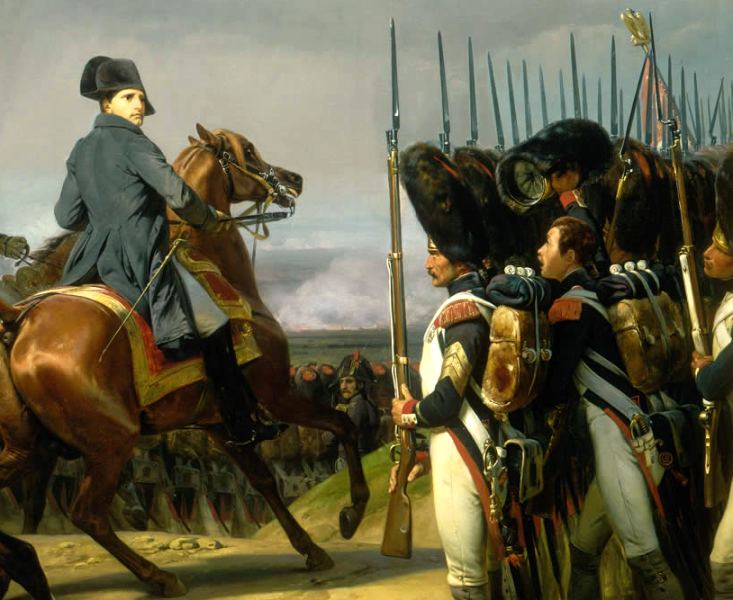
Napoleon with the Imperial Guard
at Jena in 1806 (by Horace Vernet) Read about the Guard's service at Jena here.
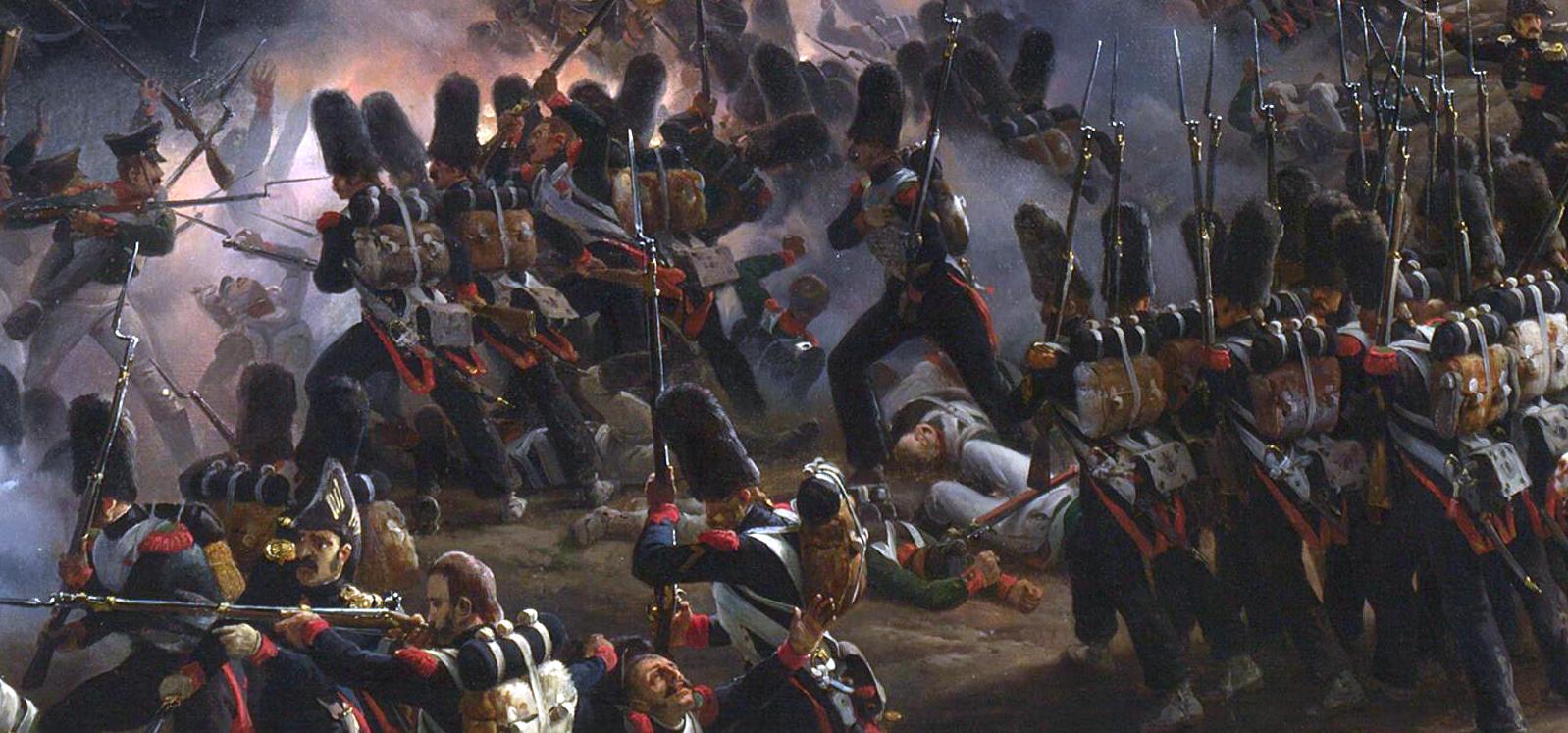
Napoleon's Imperial Guard with their muskets in 1814
fighting Russian troops using the almost identical musket by
Carle Vernet
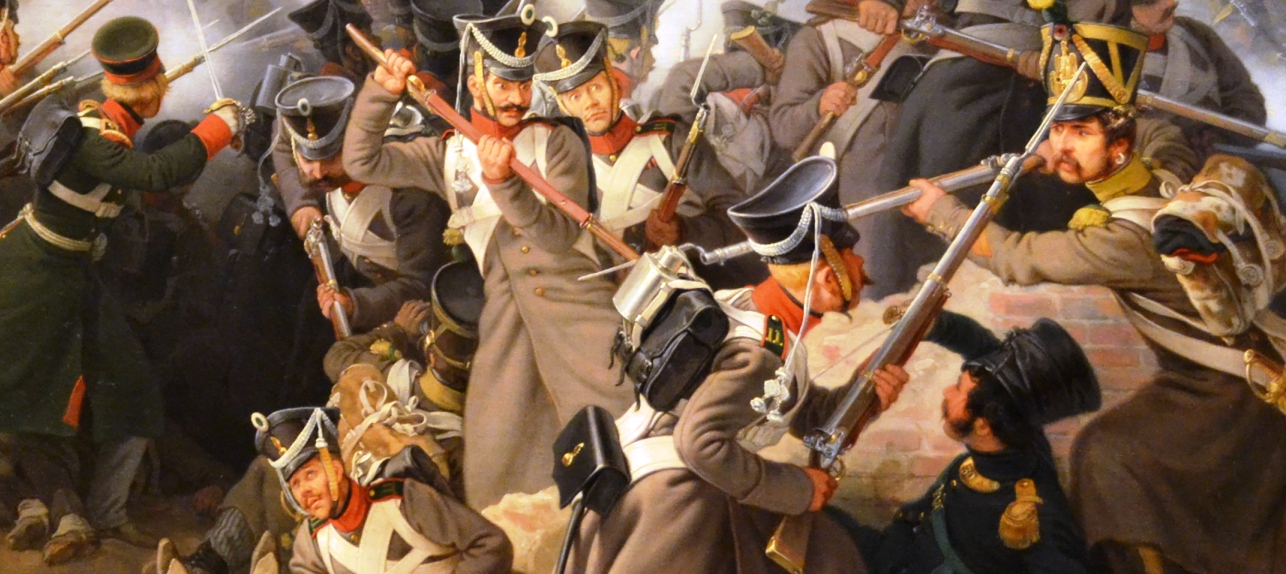
1814 Battle Scene showing Russian 1808 musket by Peter von Hoss.
In 1808 Russia copied this musket almost identically as shown above.
At the time Napoleon's France and Russia were quasi-allies. The
Russian Model 1808 Musket continued to be the principal infantry firearm
until 1845. Many were converted to percussion cap and saw service in
the Crimean War.
Our Guarantee
If upon receiving
your musket you are not completely happy with your purchase, you may return it
for a refund.
All we ask is you cover the shipping costs. It has to be returned in two weeks of receipt and be in its original state (unaltered and unmodified).
Non-Firing State
We sell historically accurate muskets and pistols in a non-firing state for demonstration purposes. This allows us to comply with various local, state, national and international firearms regulations, along with shipping company policy restrictions. This means the product comes right to your doorstep. A certified gunsmith may decide to alter a musket or pistol to a firing state by drilling the vent hole and test firing it. No need to remove the breech plug. We are not legally responsible for any changes from its present state. Please read our Conditions of Use and Legal Disclaimer. The customer is expected to be aware of the laws of their locality that govern products of this nature.