Follow us on:


|
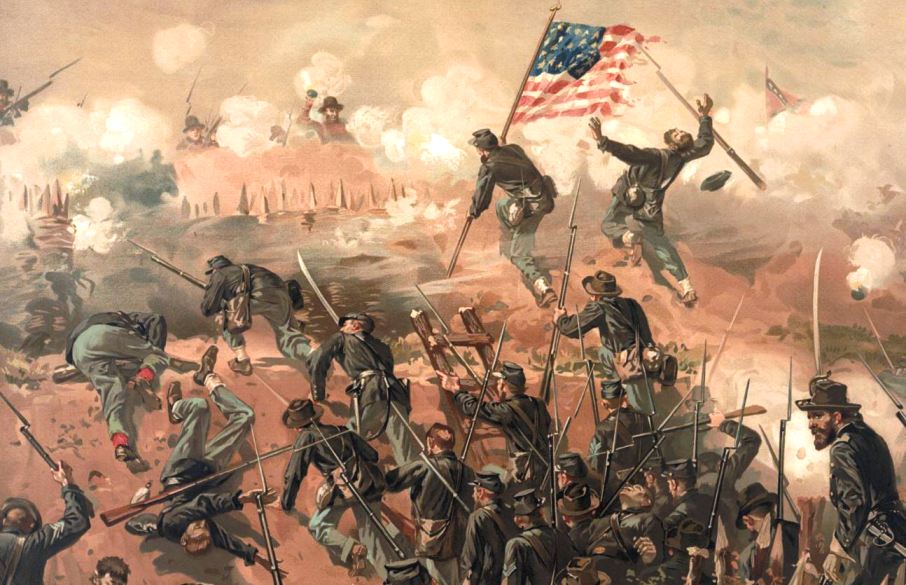
As a private in Company D of the 99th Illinois Regiment, Thomas found himself at the walls of Vicksburg, Mississippi on May 18, 1863. Commanding the Union Army of the Tennessee was Ulysses S. Grant. Grant hoped for a quick victory by storming Vicksburg's defences and overwhelming the Confederate defenders who were outnumbered three to one. However the first assault on May 19 proved a demoralizing failure with over a thousand casualties. Morale improved as the Union Army was provisioned and on the night of May 21 troops enjoyed a princely meal of hardtack (dry ship's biscuit), beans and coffee. On the following morning, after heavily shelling Confederate positions, Grant ordered a new assault. While passing his troops before the attack on May 22, Grant received a spirited chant from the Union soldiers of "Hardtack! Hardtack!" The 99th Illinois Infantry was chosen as one of the lead units. The regiment's color bearer had been wounded a few days before. On the morning of the assault, regiment's acting commanding officer recounted: "Private Thomas H. Higgins, a big, strong, athletic Irishman. solicited the privilege of carrying the flag for the day. I gave him permission and handed over the standard to him, telling him not to stop until he got into the Confederate works."
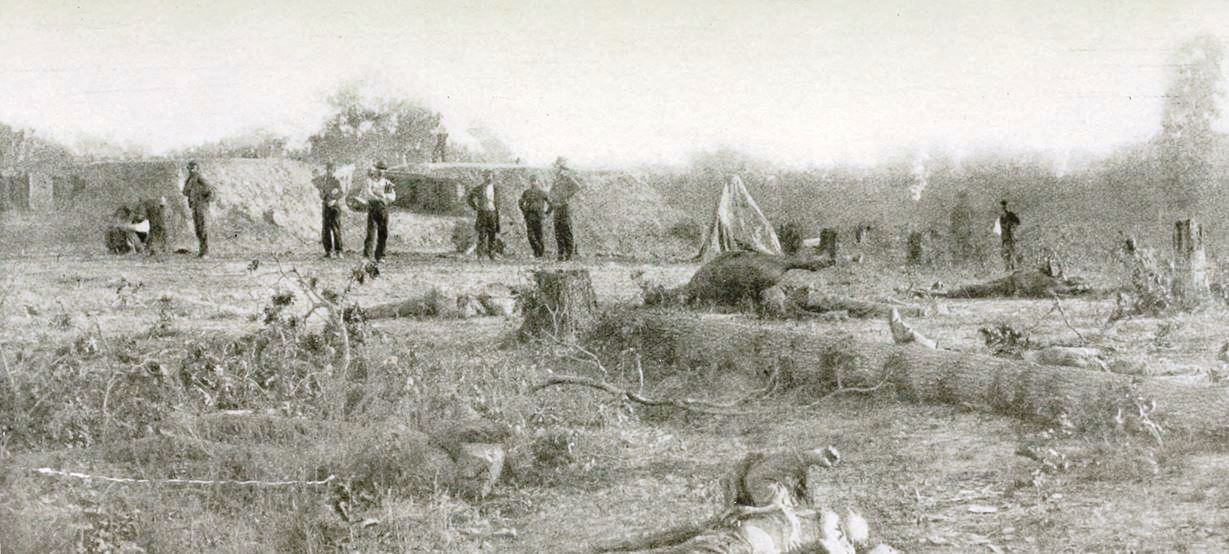
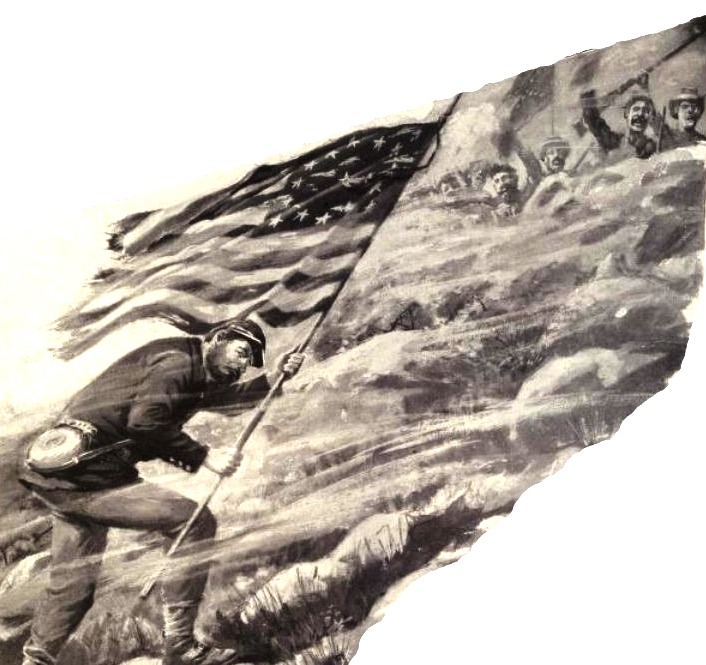
That morning of May 22 at Vicksburg, the 2nd Texas found themselves now the defenders. Retribution was at hand. For two hours Union artillery relentlessly pounded the earthen fortifications manned by the 2nd Texas: "the very earth rocked and pulsated like a thing of life." When the bombardment ceased, the 99th Illinois appeared in column with the union standard flying in the hands of Thomas. The union assault force was "about 100 yards in front of the breast works, and, as line after line of blue came in sight over the hill, it presented the grandest spectacle the eye of a soldier ever beheld", recounted Charles Evans of the 2nd Texas. However the Texans were ready. Along with their Springfield rifles, each man had five additional smooth-bore muskets, loaded with buck and ball. In essence, they could deliver six times the firepower the Union troops were expecting. The Texans held their fire until the 99th Illinois Infantry were within fifty paces of the earthworks then "the order to fire ran along the trenches, and was responded to as from one gun. As fast as practiced hands could gather them up, one after another, the muskets were brought to bear. The blue lines vanished amid fearful slaughter." Of the three hundred of the 99th Illinois who marched forward, a third fell killed or wounded. But Thomas was still alive and unhurt. Evans of 2nd Texas remembered the surprising event that happened next:
Thomas Higgins followed his commander's orders to the letter that day "not to stop until he got into the Confederate works." To the sounds of cheers of his enemy, Thomas reached the base of the breastworks and the flag on the parapet. Surprisingly there was not a scratch on him. After being taken prisoner, Thomas was congratulated by the 2nd Texas for his miraculous escape from death. His feat resonated with the Texans whom themselves had lost five color bearers at Corinth in 1862. A few days later Thomas was paroled and eventually exchanged. He ended the war with his regiment. raising to the rank of sergeant. On April 1, 1898 Thomas Higgins got a surprise. He was awarded the United States highest personal military decoration: the Medal of Honor. But who recommended him for it? The answer was not his comrades but his former enemies: the Texan Confederates that had cheered him on that day.
|