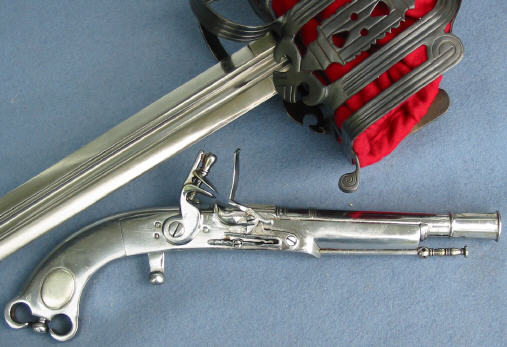
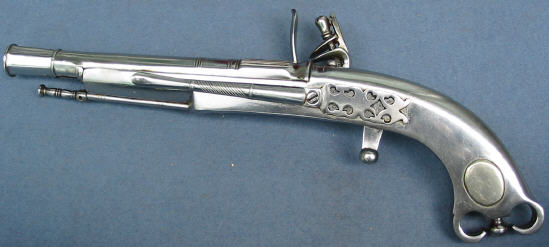
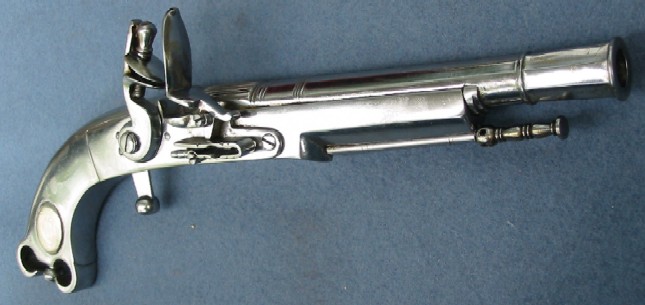
An all-steel reproduction of the decorated Highland pistol associated with the Scottish regiments.
Supplied in a non-firing state.
Full view · 1 / 3Select a photograph to inspect
Technical details Specifications & construction
Bore.52 calibre
ConstructionSteel
The pistol sold here
is all steel replica of the pistol used by Highland Regiments during the 18th
century.
As the pictures attest, this .52 calibre reproduction is faithful to those of the
period.
The
item is made of tempered seamless modern
steel (type:BS970 no.080M40)
with a tight
breech plug.
The lock is made with strong durable springs
and has a
case-hardened frizzen (hammer) that throws good sparks.
We
use a industrial case-hardening factory process that makes sparking both more
reliable and longer lasting.
Presently no other musket provider uses
this technique.
As with all our
other flintlocks, the vent is not drilled (read details below) so we can ship easily to your door
throughout North America and to Europe and the UK.
Aside from that they
are exactly like
the originals.
A fine addition to any collection.
The story behind the pattern
History
Pistols were
considered requisite items for the Highland soldier as early as the
1730s.
By the 1740s the elegant pistol styles of Christie &
Murdoch (armourers of Doune, Stirlingshire) had became the most sought after
amongst Highland officers.
The unique elements of the Doune pistols were
the scroll or rams horn butt, fluted barrels at the breech and the octagonal flared muzzles.
Soon
pistol makers all across Scotland (and in England) began to copy the styles of
Doune.
The replica offered
here represents one of the many copies made at that time.
One surviving
original, same style as the replica, is marked "RHR" on the barrel,
standing for the Royal Highland Regiment (becoming the 42nd Royal Highland
Regiment "Black Watch").
Many of the pistols carried by the men of the 42nd during the
French and Indian War were actually made in Birmingham by Isaac Bissell.
The steel pistol was used in the ranks of Highland Regiments into the 1780s,
when a less expensive (and less elegant) bronze pistol began to challenge the
dominance of the steel version in the ranks of Britain's Highland
Regiments.
By the mid-1790s Highland Regiments had
abandoned their pistols.
Highland sergeants
and men wore one steel pistol under the left arm, hung through the pistol's
belt hook on a thin buff leather belt.
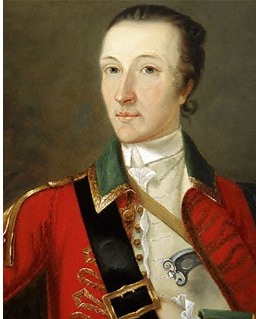
Highland Officer, 1762
showing the butt of the pistol and the small leather belt it is hooked
on
Our Guarantee
If upon receiving your musket you are not completely happy with
your purchase, you may return it for a refund. All we ask is you cover the
shipping costs. It has to be returned in two weeks of receipt and be in its
original state (unaltered and unmodified).
Non-Firing State
We sell historically accurate muskets and pistols in a non-firing state for demonstration purposes. This allows us to comply with various local, state, national and international firearms regulations, along with shipping company policy restrictions. This means the product comes right to your doorstep. A certified gunsmith may decide to alter a musket or pistol to a firing state by drilling the vent hole and test firing it. No need to remove the breech plug. We are not legally responsible for any changes from its present state. Please read our Conditions of Use and Legal Disclaimer. The customer is expected to be aware of the laws of their locality that govern products of this nature.