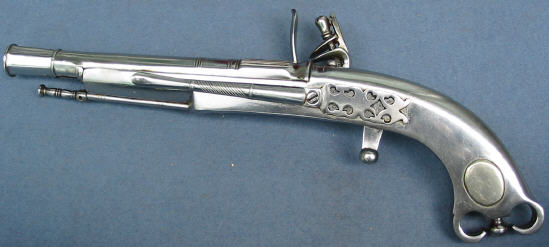
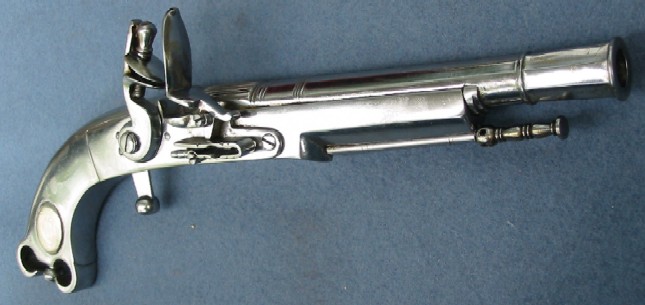
A plainer Highland military pistol reproduction with BISSELL markings and a distinctive stepped breech.
Supplied in a non-firing state.
Full view · 1 / 5Select a photograph to inspect
Technical details Specifications & construction
Bore.52 calibre
MarkingsBISSELL
Scottish pistols
for the other ranks were more simpler in design than the elegant Murdock
pistol we offer. As the pictures attest, this .52 calibre reproduction is faithful to those of the
period complete with BISSELL maker markings, the unique stepped breech, and
functional vent cleaner screw.
The
item is made of tempered seamless modern
steel (type:BS970 no.080M40)
with a tight
breech plug.
It is highly polish steel and is not plated. The lock is made with strong durable springs
and has a
case-hardened frizzen (hammer) that throws good sparks.
We
use an industrial case-hardening factory process that makes sparking both more
reliable and longer lasting.
Presently no other musket provider uses
this technique.
As with all our
other flintlocks, the vent is not drilled (read details below) so we can ship easily to your door
throughout North America and to Europe and the UK.
Aside from that they
are exactly like
the originals.
A fine addition to any collection.
The story behind the pattern
History
Since Highland
regiments were raised in 1725, sergeants and the men were armed with
Scottish pattern pistols. The most famous of these units was the
42nd, or Royal Highland Regiment, the Black Watch. The pistol
offered here is based on an interesting original that appears to have been
marked "HR" or "Highland Regiment" and then an "R" was was added at the
beginning when the became "Royal" in 1758. This suggests that
this pattern predates that date and was probably the pattern issued in the
1740s at the time of the Battle of Culloden.
While pistols
were issued in pairs, only one was carried by each soldier. For
example the 88th Highlanders when they were disbanded in 1764, returned 405
pairs of pistols or 810 pistols which matched the number of men in the unit.
Below shows painting detail of Highlanders using pistols and swords while
battling aboriginal warriors in the wilds of North America (below left) .
The men carried their pistols hooked on a leather strap under their fashion
as illustrated in the following 1757 plate of a Highlander (below right).
After the
French and Indian Wars, the highland pistol continued to be used throughout
the rest of the 18th century. After the American revolution,
regiments like the 84th Highland Regiment turned in their pistols into
stores in Halifax, Nova Scotia. Additional Highland pistols from New
York City were transfered to Halifax in 1784. By 1793, 310 pairs
of other ranks pistols were in stores. Similar stock piles were
reported in Quebec City and records show highland pistols began to be sent
to "outposts". Considering the Scottish heritage of the
Northwest Fur Trade Company, it is conceivable they came into their
possession as outposts pushed further and further into the interior of the
continent.
If upon receiving your musket you are not completely happy with
your purchase, you may return it for a refund. All we ask is you cover the
shipping costs. It has to be returned in two weeks of receipt and be in its
original state (unaltered and unmodified).
Non-Firing State
We sell historically accurate muskets and pistols in a non-firing state for demonstration purposes. This allows us to comply with various local, state, national and international firearms regulations, along with shipping company policy restrictions. This means the product comes right to your doorstep. A certified gunsmith may decide to alter a musket or pistol to a firing state by drilling the vent hole and test firing it. No need to remove the breech plug. We are not legally responsible for any changes from its present state. Please read our Conditions of Use and Legal Disclaimer. The customer is expected to be aware of the laws of their locality that govern products of this nature.