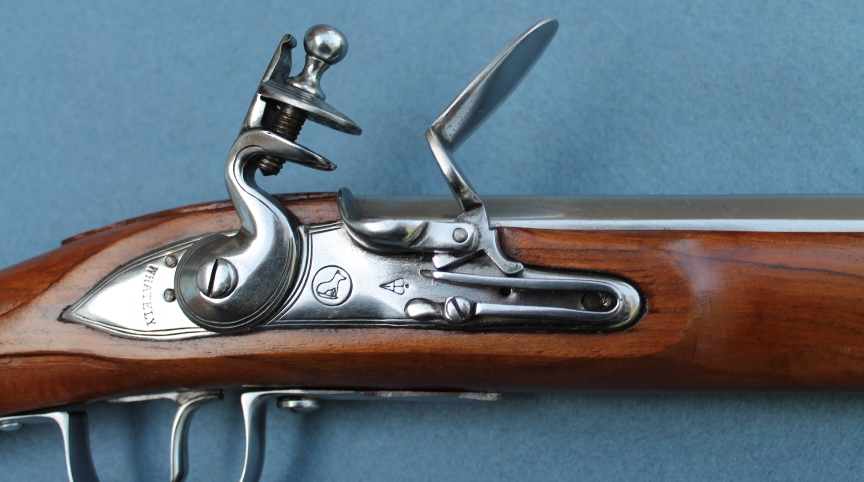
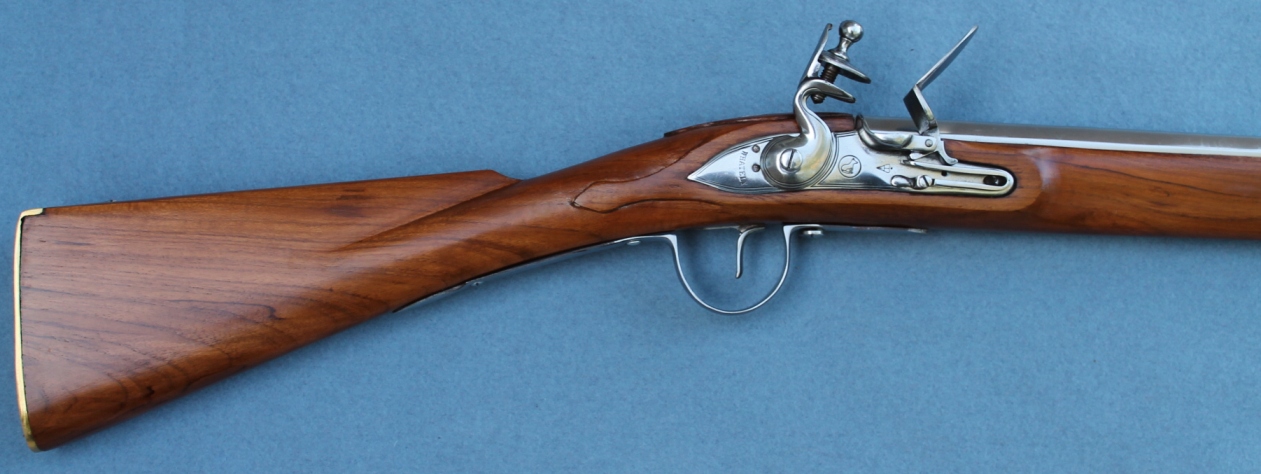
The shorter Northwest trade-gun pattern, with a 36-inch barrel and a history tied to the North American fur trade.
Supplied in a non-firing state.
Full view · 1 / 7Select a photograph to inspect
Technical details Specifications & construction
Barrel36 inches
Bore20 gauge (.625 calibre)
Overall length52 inches
This
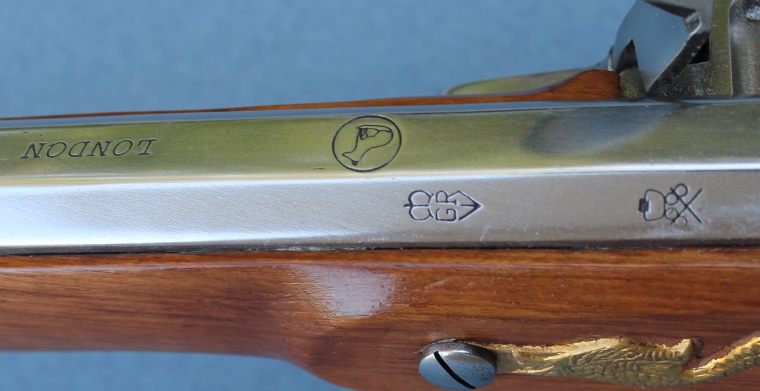
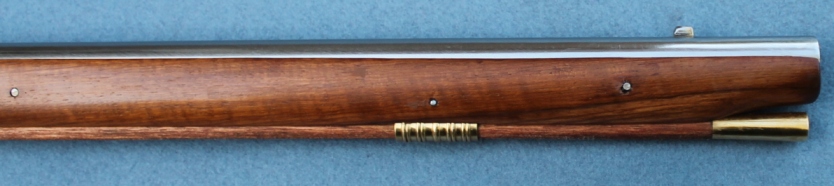
smooth-bore musket has a 36-inch octagon-to-round barrel with a 20 gauge
bore (.625 calibre). Archaeological finds (example David
Thompson's musket balls in 1811) point to a .57 of .58 ball being
most commonly used. Overall length of reproduction is 52 inches.
Because the browning varied from original
to original, and is dictated by personal preference, we have left it in
the bright steel. The British made trade guns manufactured
before 1816 were most likely browned naturally and were not blued.
Read more about browning of arms by the British
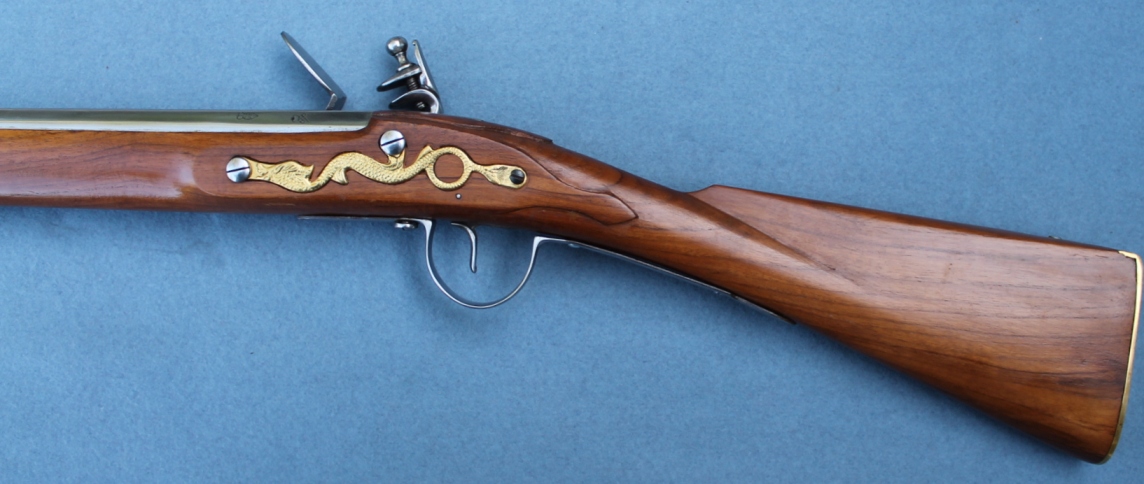
here. Of course the lock screws go through the iconic brass
coiled serpent / dragon patterned plate. The stock butt is squared
like the originals. This style of butt was popular with sea
service muskets and was presumably considered more durable.
As the photographs attest, this
replica is quite well assembled with a case hardened frizzen cover (hammer)
producing good sparks.
The
seamless tempered barrels are made of polished gun steel (type
:BS970 no.080M40-
auto industry foundry)
and the breeches are tight.
We use an
industrial case-hardening factory process that makes sparking both more reliable
and longer lasting.
Presently no other musket provider uses this
technique.
As with all our
other flintlocks, the vent is not drilled (read details below) so we can ship easily to your door
throughout North America and to Europe and the UK.
Aside from that they
are exactly like
the originals.
A fine addition to any collection.
The story behind the pattern
History
Tecumseh War - War of 1812 - Fur Trade
- American Indian Wars
Shipments
of shorter "Chief's guns" started to arrive from England in 1811. At
least 6,000 would be distributed by the British to their Native allies.
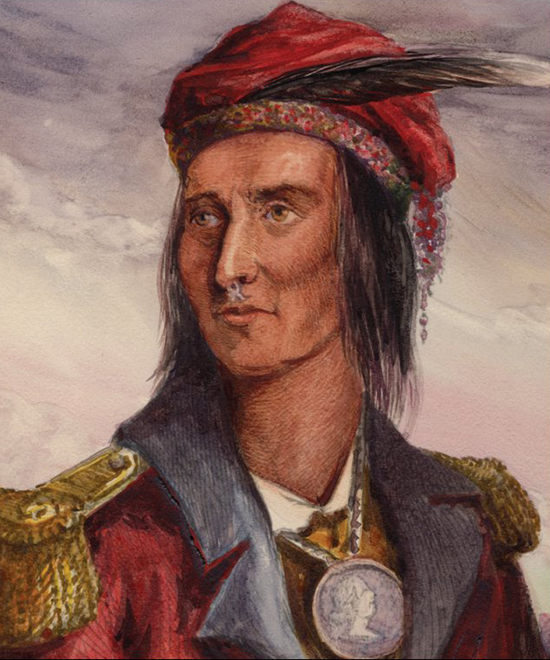
Among those receiving this flintlock musket was the famous Shawnee Chief
Tecumseh. A thorn in the side of Americans attempting to settle in
Ohio, and Michigan, Tecumseh waged war to protect the Shawnee homelands (see
Tecumseh's War). From the British
Indian Department depot at Amherstburg on the Detroit River, Tecumseh was
given one these shorter Northwest fur trade guns. Luckily Tecumseh's
musket survived the test of time and is in the Museum of the Fur Trade.
Tecumseh
During the War of 1812, the Shawnee fought in numerous
battles and some even were on the British fleet as sharpshooters during the
battle of Put-in-Bay when Perry took control of Lake Erie. Tecumseh
was killed in the Battle of the Thames in late 1813. After the war,
the Shawnee signed the 1817 Treaty of Fort Meigs and was eventually
relocated to Kansas and Oklahoma, taking their Northwest fur trade guns with
them.
The shorter 36 inch barreled Northwest "Chief's" gun,
slowly gained popularity over its
longer version. It was found
that accuracy of the shorter barrel was really no different from the longer
version. The carbine-like length of the shorter gun made it more
useful on horse back. By the 1830s, the shorter barrel had
become equal, if not more popular to 42 inch barreled fur trade gun.
Certainly storing the shorter gun in a canoe was more convenient.
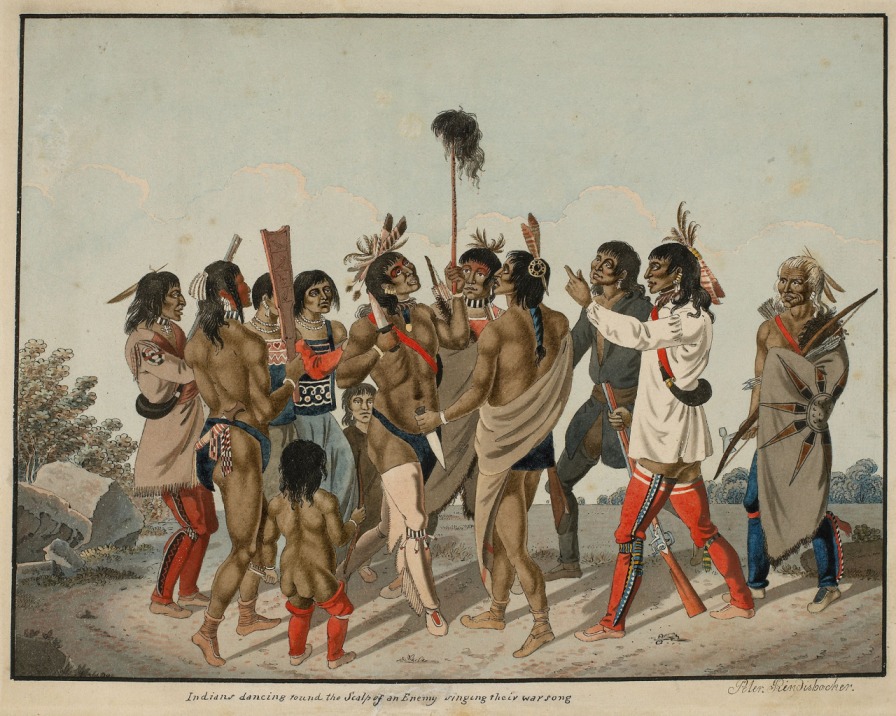
Natives dancing around a scalp with the shorter Chief's style musket
illustrated in 1822 by Peter Rindisbocker
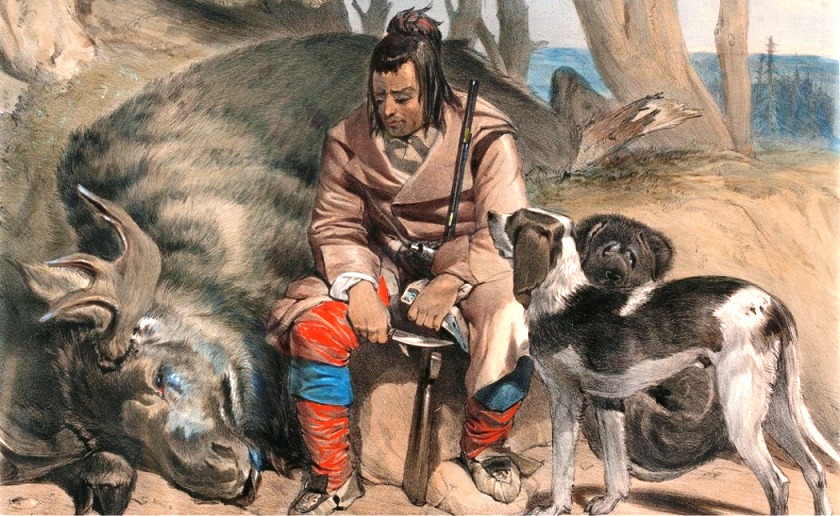
Moose Hunter, 1840
Our Guarantee
If upon receiving your musket you are not completely happy with
your purchase, you may return it for a refund. All we ask is you cover the
shipping costs. It has to be returned in two weeks of receipt and be in its
original state (unaltered and unmodified).
Non-Firing State
We sell historically accurate muskets and pistols in a non-firing state for demonstration purposes. This allows us to comply with various local, state, national and international firearms regulations, along with shipping company policy restrictions. This means the product comes right to your doorstep. A certified gunsmith may decide to alter a musket or pistol to a firing state by drilling the vent hole and test firing it. No need to remove the breech plug. We are not legally responsible for any changes from its present state. Please read our Conditions of Use and Legal Disclaimer. The customer is expected to be aware of the laws of their locality that govern products of this nature.