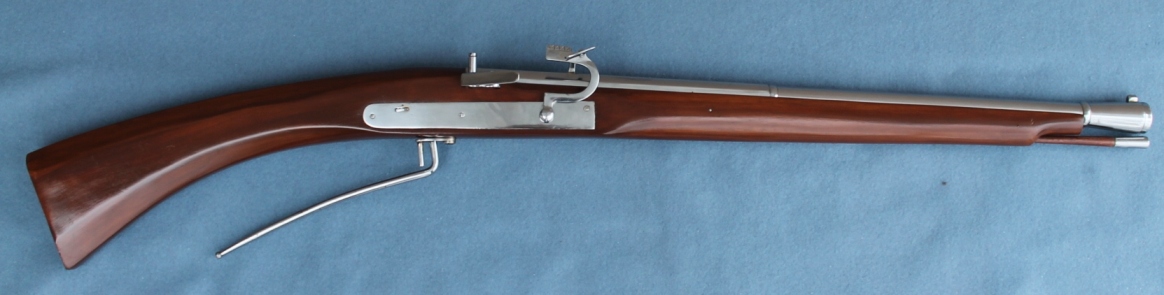
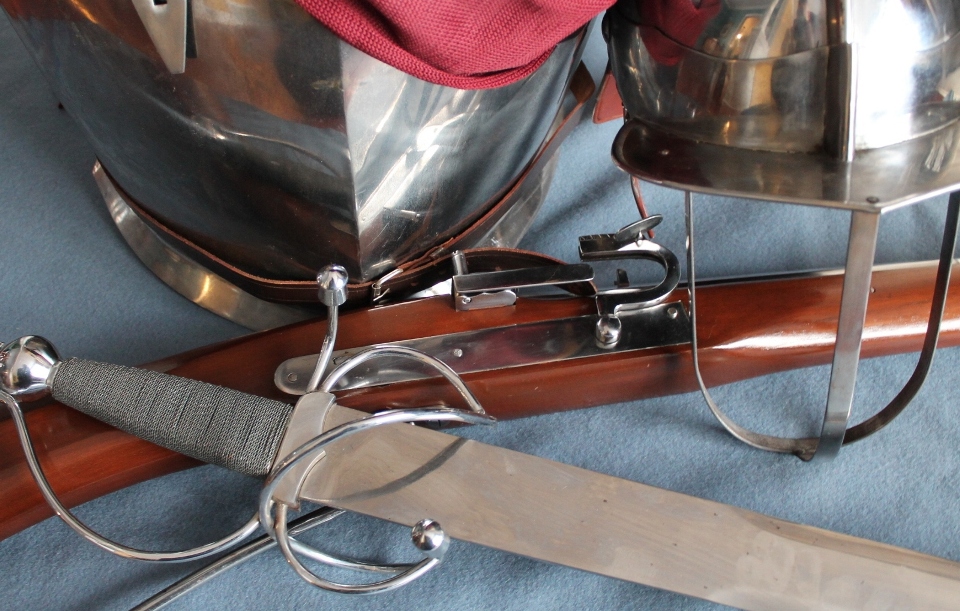
An early matchlock reproduction with a distinctive flared exterior muzzle and compact octagon-to-round barrel.
Supplied in a non-firing state.
Full view · 1 / 6Select a photograph to inspect
Technical details Specifications & construction
Barrel28½ inches
Bore.57 calibre
Overall length46 inches
This
smooth-bore matchlock has a 28 1/2-inch octagon-to-round barrel with a .57
calibre bore. As the pictures show, the flare at the muzzle to provide
extra strength and was not flared in the bore like a blunderbuss. Overall length of
this reproduction is
46 inches. An interesting feature include a safety
catch on the trigger lever.
The
seamless tempered barrels are made of polished gun steel (type
:BS970 no.080M40-
auto industry foundry)
and the breeches are tight. The barrel walls are thick to match the
historic mass of the originals and makes the wait of this "hand gonne" 9lbs.
As with all our
other muskets, the vent is not drilled (read details below) so we can ship easily to your door
throughout North America and to Europe and the UK.
Aside from that they
are exactly like
the originals.
A fine addition to any collection.
The story behind the pattern
History
Spanish Conquistadors - Queen
Elizabeth's Army - Landsknecht Mercenaries - Age of Explorers - Hundred
Years War
Firearms evolved
quickly throughout the 16th century. Armies hurried to replace
their archers with troops armed with Matchlocks. Caliver patterns or
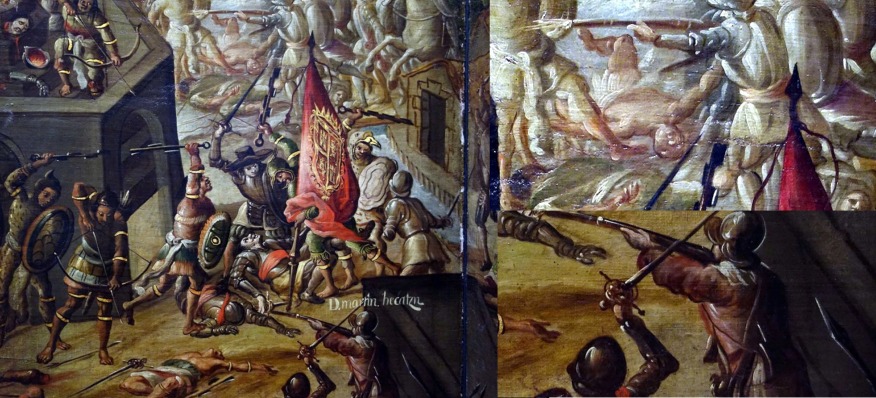
"light" muskets imerged. In the New World the
Spanish Conquistadors found their matchlocks had an added shock value when
fighting against the Aztecs and other native tribes. The result was
the conquest of Mexico.
Spanish fighting Aztecs in Mexico. Note the reinforced muzzle of the
Conquistador's matchlock about to shoot.
Spanish invade the Inca Empire
Other European armies battled with this style of
matchlock including Queen Elizabeth's army and navy. However probably
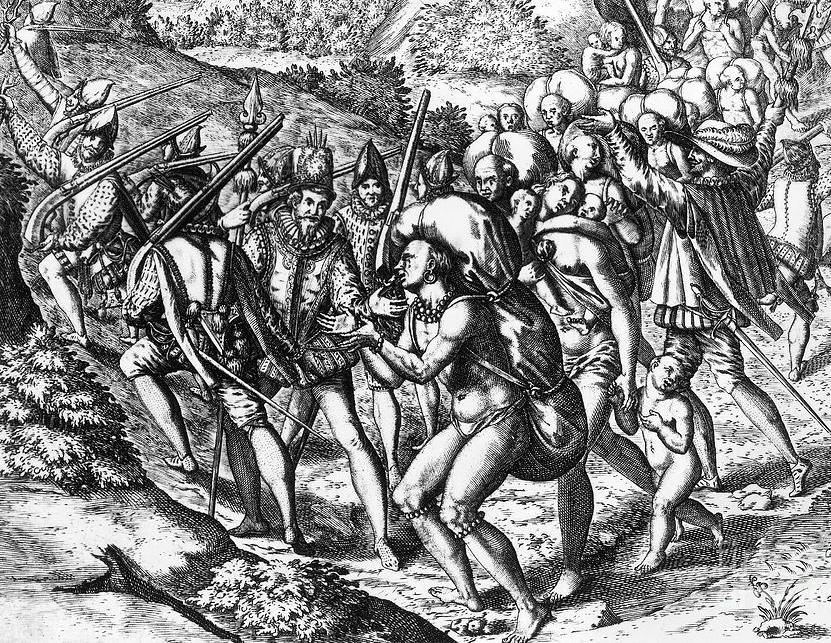
the most notable were the German Landsknecht mercenary troops. The
Landsknecht matchlock designs were initially more square and ornate in the
stock. By the mid 1500s the pattern offered for sale here started to
appear.
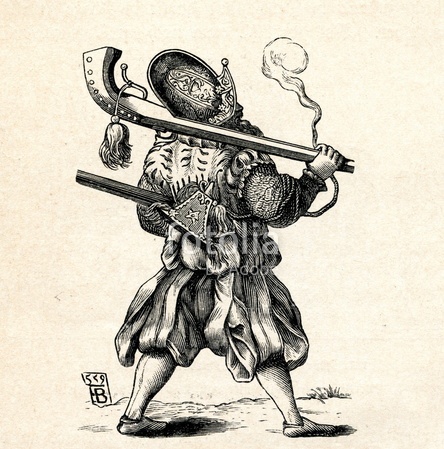
German Landsknecht in the mid-16th century. The artist took liberties
making the curve of the stock more dramatic.
This slopping stock butt pattern was then
introduced to Japan, China, and India by Portuguese explorers and
traders in the 1540s and shaped matchlock production in Asia for the next
300 years.
So why was this matchlock short? The
quality of steel was poor so the thickness of the barrel walls were
significant. So while shorter, it weighs almost 9 lbs. Improvements in
steel and metallurgy saw a reduction in the amount of steel needed in a
barrel. As a result the matchlock arquebus became longer.
Our Guarantee
If upon receiving your musket you are not completely happy with
your purchase, you may return it for a refund. All we ask is you cover the
shipping costs. It has to be returned in two weeks of receipt and be in its
original state (unaltered and unmodified).
Non-Firing State
We sell historically accurate muskets and pistols in a non-firing state for demonstration purposes. This allows us to comply with various local, state, national and international firearms regulations, along with shipping company policy restrictions. This means the product comes right to your doorstep. A certified gunsmith may decide to alter a musket or pistol to a firing state by drilling the vent hole and test firing it. No need to remove the breech plug. We are not legally responsible for any changes from its present state. Please read our Conditions of Use and Legal Disclaimer. The customer is expected to be aware of the laws of their locality that govern products of this nature.