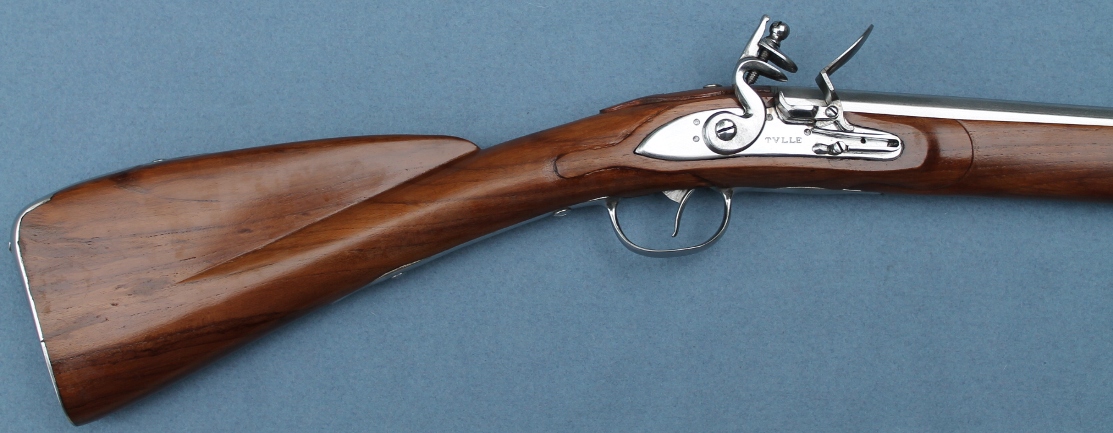
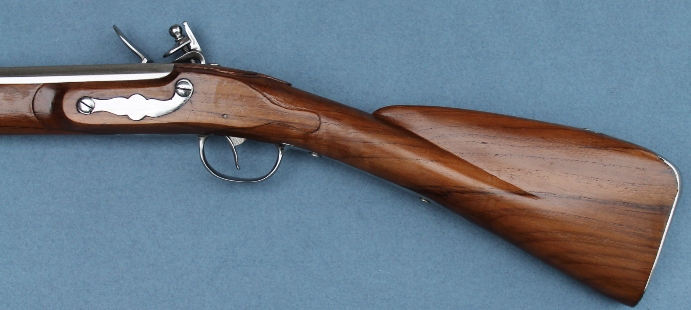
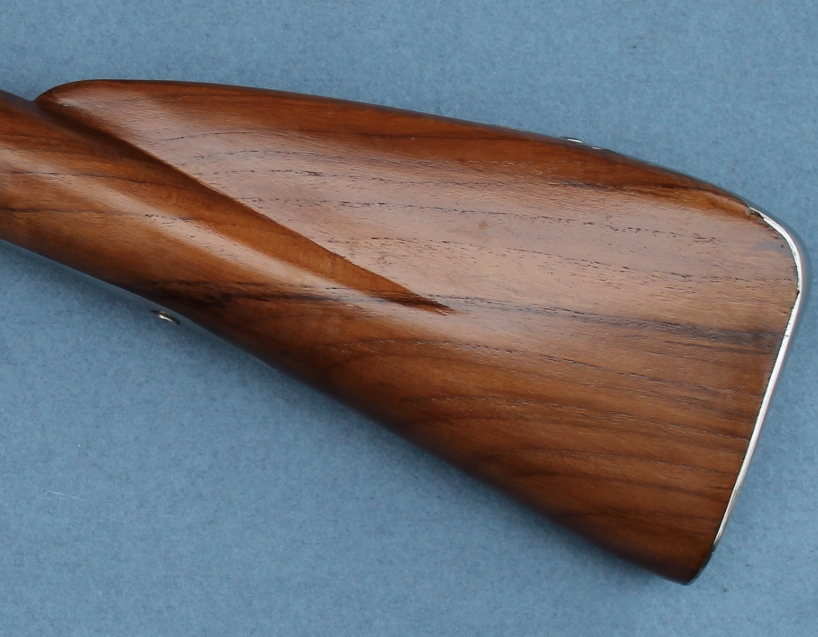
The Tulle fusil de chasse, with its distinctive curved butt and long association with the North American fur trade.
Supplied in a non-firing state.
Full view · 1 / 8Select a photograph to inspect
Technical details Specifications & construction
Barrel44 inches
Bore20 gauge (.625 calibre)
Overall length60 inches
This
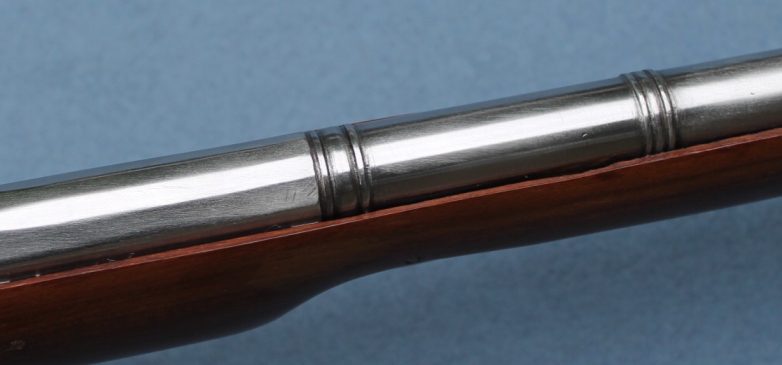
smooth-bore musket has a 44-inch octagon-to-round barrel with a 20 gauge
bore (.625 calibre). Total length of the musket is 60 inches.
The "cow's foot" shaped butt made this hunting musket an excellent shooter
because the recoil was softened into the shoulder by the curve.
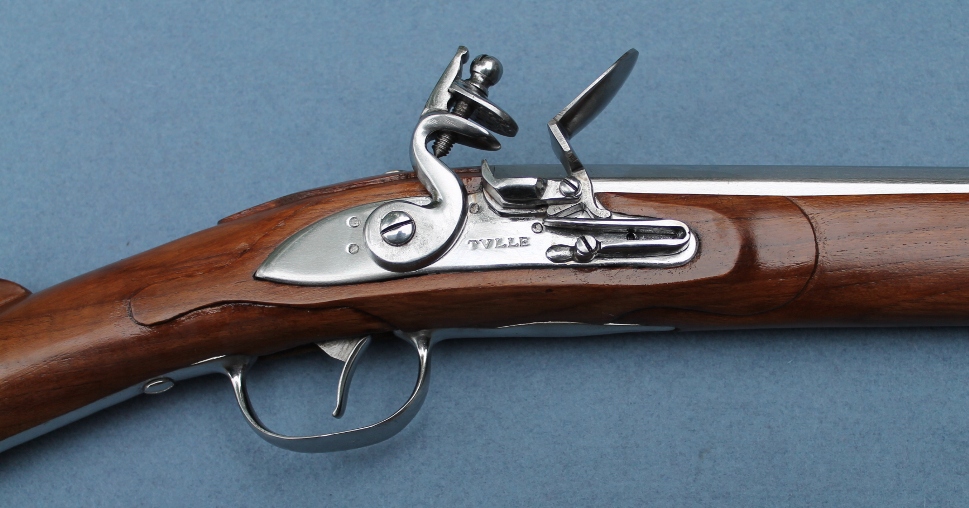
As the photographs attest, this
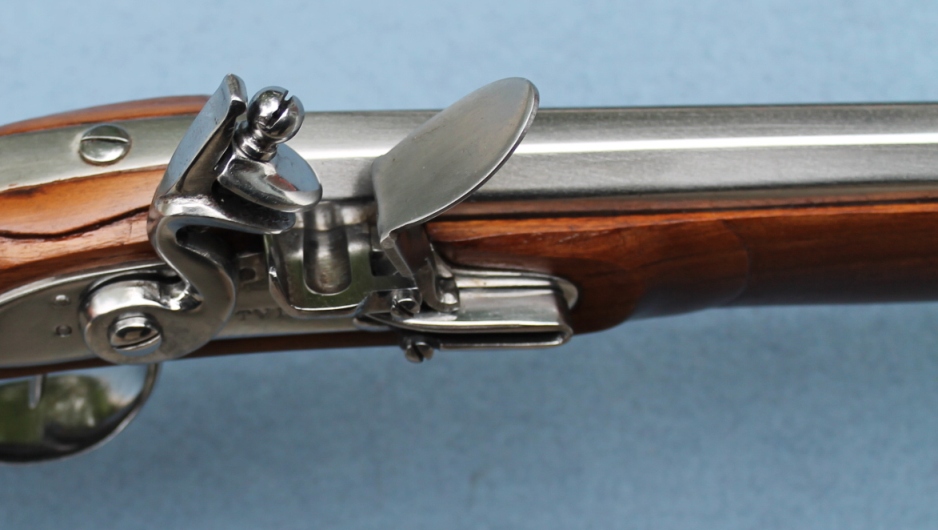
replica is quite well assembled with a case hardened frizzen cover (hammer)
producing good sparks.
The
seamless tempered barrels are made of polished gun steel (type
:BS970 no.080M40-
auto industry foundry)
and the breeches are tight.
We use an
industrial case-hardening factory process that makes sparking both more reliable
and longer lasting.
Presently no other musket provider uses this
technique.
As with all our
other flintlocks, the vent is not drilled (read details below) so we can ship easily to your door
throughout North America and to Europe and the UK.
Aside from that they
are exactly like
the originals.
A fine addition to any collection.
The story behind the pattern
History
Voyageurs - American Natives -
French and Indian War
This
musket saw extensive use throughout the 18th century. Manufactured in
the Tulle arsenal in France at the end of the 17th century, it became
immediately popular with New France's population, particularly those in the
fur trade. France's native allies were quickly armed with this .62
calibre "fusil de chasse" or hunting musket, making it North America's first
trade gun. In 1704 when Atiwan natives and French militia raided
Deerfield, they had this longarm.
The lock plate shows the old spelling of the
arsenal as TVLLE. The "V" did not change to a "U" until 1745.
Interestingly enough, some of the arms Benjamin Franklin purchased from
France for the American Revolution were marked "TVLLE", meaning their
manufacture dated to before 1745.
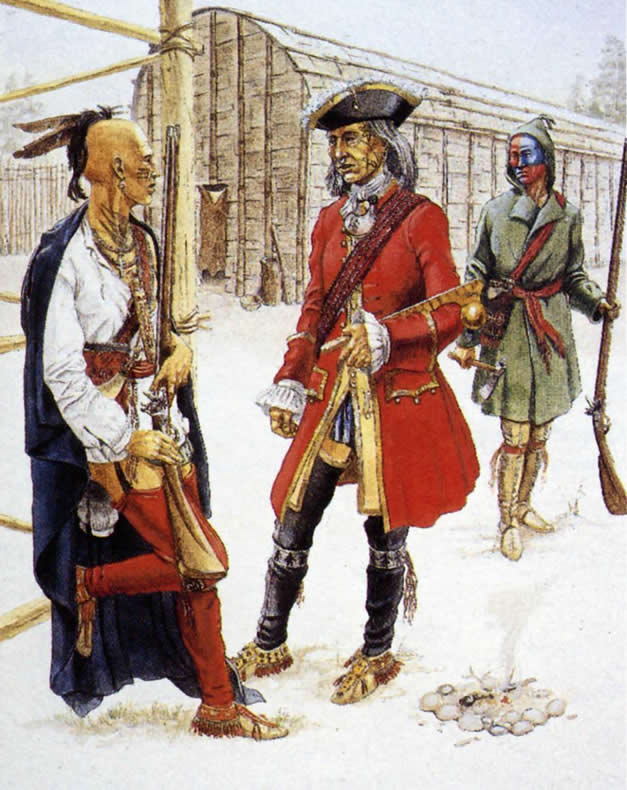
Eastern
Woodland Indians carrying this musket in the mid-18th Century by David
Rickman (DND)
The fusil de chasse
saw significant service during
the War of the Austrian Succession (King George's War) and the French and
Indian War. Success of the militia and their native allies at the
opening of the Seven Years War was nothing short of astounding. After
New France fell in 1760, the French voyageur continued to move westward,
discovering new routes and tribes to trade with. In their canoes were
their trusted Tulle hunting musket.
After 1760, when the British introduced its own American
Indian trade gun, it copied calibre and look of the French model.
However the droop "cow's foot" butt was abandoned.
French militia with the "fusil de chasse"
in the French and Indian War (Francis Back -web)
Our Guarantee
If upon receiving your musket you are not completely happy with
your purchase, you may return it for a refund. All we ask is you cover the
shipping costs. It has to be returned in two weeks of receipt and be in its
original state (unaltered and unmodified).
Non-Firing State
We sell historically accurate muskets and pistols in a non-firing state for demonstration purposes. This allows us to comply with various local, state, national and international firearms regulations, along with shipping company policy restrictions. This means the product comes right to your doorstep. A certified gunsmith may decide to alter a musket or pistol to a firing state by drilling the vent hole and test firing it. No need to remove the breech plug. We are not legally responsible for any changes from its present state. Please read our Conditions of Use and Legal Disclaimer. The customer is expected to be aware of the laws of their locality that govern products of this nature.